
This article is based from the live broadcast discussion (in English and Filipino) on Unboxing Catholicism Live. Part 2 of this series will go on-air on March 5, 2023 (Sunday) at 8 pm, Manila Time.
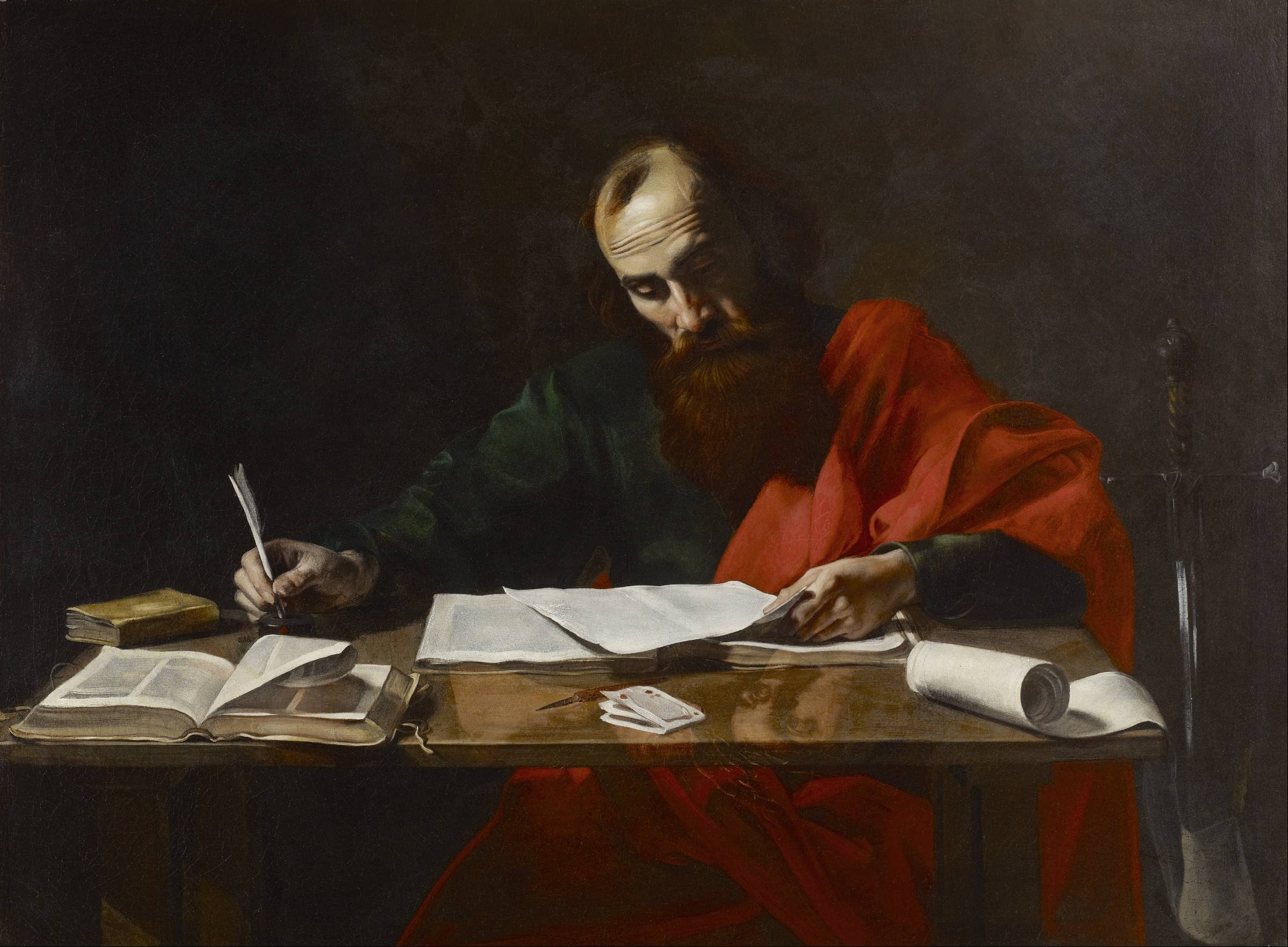
Saint Paul, one of the most prominent figures in the New Testament, is often cited by both Catholics and Protestants as a key source of Christian doctrine. However, there is a longstanding debate about whether Saint Paul can be considered a Catholic.
Protestants often claim that Saint Paul’s teachings contradict Catholic dogma, while Catholics maintain that he was indeed a Catholic and that his writings are consistent with Catholic teachings.
In this Unboxing Catholicism Apologetics tract, we will examine the evidence for and against the idea that Saint Paul was a Catholic, and we will address some common misconceptions about his writings that have led to confusion among Protestants.
Protestant Claim #1: Saint Paul was an independent church planter and did not need an organized religion because religion is not important.
Protestants may argue that Saint Paul’s direct calling from Christ to conversion implies that he did not need an organized religion. However, this claim is not entirely true. In Romans 10:15, Saint Paul acknowledges that preachers need to be sent in order to preach the gospel: “And how can men preach unless they are sent?” Even Jesus Himself was sent by the Father (John 20:21), and Jesus sent the Church (Matthew 16:18-19).
Moreover, Saint Paul consulted the apostles about his preaching, as seen in Galatians 1:18-19 and Galatians 2:1-10, to ensure that he was not running or working in vain. In Acts 15, we see how Saint Paul consulted with the apostles about the issue of circumcision and was sent by them to deliver the decision to the Gentiles.
Saint Paul also taught about the various ministries within the Church and emphasized the importance of organization within the Body of Christ. In Ephesians 1:22-23, he wrote, “And he put all things under his [Christ’s] feet and gave him as head over all things to the church, which is his body, the fullness of him who fills all in all.” Here, Saint Paul referred to the Church as the body of Christ, with Christ as the head.
In Ephesians 4:15-16, he wrote, “Rather, speaking the truth in love, we are to grow up in every way into him who is the head, into Christ, from whom the whole body, joined and held together by every joint with which it is equipped, when each part is working properly, makes the body grow so that it builds itself up in love.” This passage emphasizes the importance of each member of the Church working together properly to build up the body of Christ.
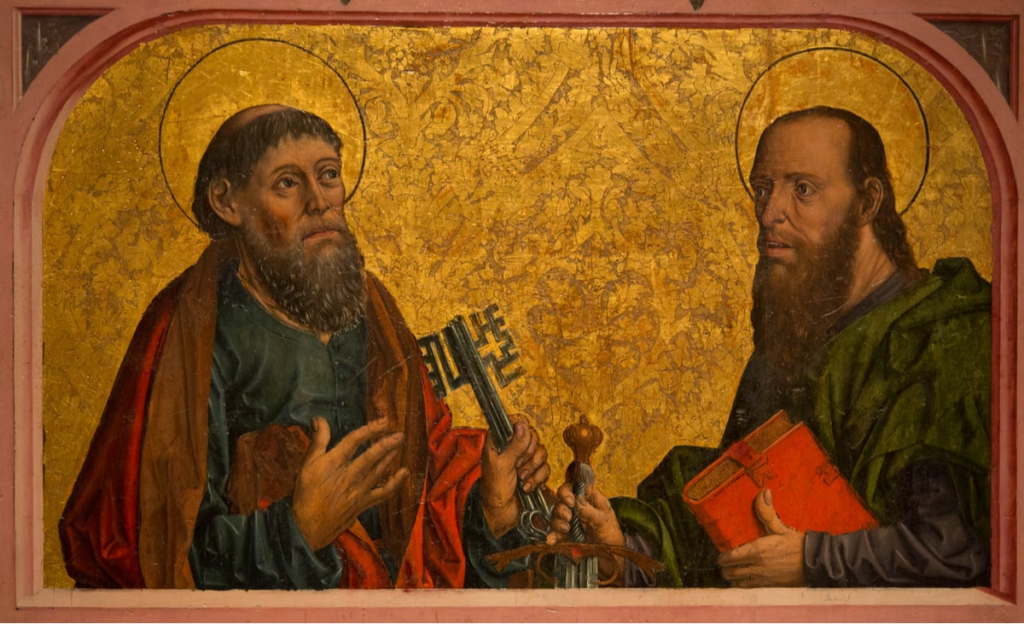
Protestant Claim #2: Saint Paul didn’t treat St. Peter as the Pope. In fact, he “opposed him to his face.”
St. Paul’s disagreement with St. Peter has been used by some Protestants to argue that Peter was not the Pope or had no authority over the other apostles. However, it is important to understand the context of their disagreement. In Galatians 2:11-14, St. Paul recounts how he had to correct St. Peter’s behavior in Antioch. At the time, some Jewish Christians believed that Gentile converts needed to follow Jewish customs, including circumcision, in order to be saved. St. Peter had previously eaten with Gentile Christians, but when these Jewish Christians arrived, he separated himself from the Gentiles, which led to confusion and division. St. Paul confronted St. Peter about this hypocrisy, arguing that it was contrary to the Gospel and would lead others astray. The issue here was not about Peter’s authority or doctrinal teachings, but his misbehavior towards Gentile Christians.
In fact, St. Paul was just urging St. Peter to follow what he himself has infallibly taught in the Council of Jerusalem in Acts 15!
Protestant Claim #3: Saint Paul preached the idea of basing Christianity from “Bible alone” or “sola Scriptura.”
The Protestant claim that St. Paul relied only on the Bible as his sole authority is based on a misunderstanding of several key passages in his letters. One of the proof-texts often cited is 2 Timothy 3:16-17, where Paul writes that “All Scripture is God-breathed and is useful for teaching, rebuking, correcting and training in righteousness.” However, this verse does not say that Scripture is the only authority or that it is sufficient in and of itself. In fact, when Paul wrote these words, there was still no New Testament canon, and he likely had in mind the Jewish Scriptures or Old Testament.
Furthermore, Paul himself recognized the authority of the Church, which he described as “the pillar and foundation of truth” in 1 Timothy 3:15. This means that the Church is entrusted with the task of preserving and passing on the truth of the faith. This includes the interpretation of Scripture, which is not a matter of private judgment but of the Church’s authoritative teaching.
Another verse that Protestants often use to support their claim is 1 Corinthians 4:6, where Paul writes, “I have applied these things to myself and Apollos for your benefit, brothers, so that you may learn from us not to go beyond what is written, so that none of you will be inflated with pride in favor of one person over against another.” However, this verse is not a rejection of tradition or the authority of the Church. Rather, Paul is cautioning the Corinthians against pride and division, which had led them to follow different leaders and boast about their spiritual gifts. He is reminding them to stick to the basics of the faith and not to get caught up in rivalries or factions.
In other passages, Paul explicitly appeals to tradition and the oral teaching of the apostles, as in 2 Thessalonians 2:15, where he urges the Thessalonians to “stand firm and hold fast to the teachings we passed on to you, whether by word of mouth or by letter.” Similarly, in 1 Corinthians 11:2, he commends the Corinthians for “maintain[ing] the traditions even as I delivered them to you.” These passages show that Paul did not see Scripture as the sole source of authority but recognized the importance of the Church’s teaching and tradition.
Finally, in Ephesians 3:10-11, Paul emphasizes the role of the Church in revealing the wisdom of God to the world, highlighting the Church’s authority and importance. He writes, “so that through the church the manifold wisdom of God might now be made known to the rulers and authorities in the heavenly places. This was according to the eternal purpose that he has realized in Christ Jesus our Lord.” This passage underscores the fact that God’s plan for salvation is carried out through the Church, and that the Church is the means by which God reveals his truth to the world.
The question of whether Saint Paul was a Catholic has long been debated by Catholics and Protestants, with the latter often citing his teachings as contradictory to Catholic dogma. However, the evidence suggests that Saint Paul was indeed a Catholic. Protestants argue that Saint Paul did not need organized religion, but he acknowledged the need for preachers to be sent, consulted with the apostles, and emphasized the importance of organization within the Body of Christ. St. Paul’s disagreement with St. Peter was not about the latter’s authority but about his misbehavior towards Gentile Christians. The claim that St. Paul relied only on the Bible as his sole authority is based on a misunderstanding of several key passages in his letters, and he himself recognized the authority of the Church, which he described as “the pillar and foundation of truth.” In conclusion, Saint Paul was a Catholic, and his writings are consistent with Catholic teachings.
Watch this discussion (in Tagalog English) on our YouTube Channel.
Blog article prepared by Voltaire delos Reyes, Bernz O. Caasi and Unboxing Catholicism Staff.

Leave a Reply