Author: Bernz Ordoñez Caasi

  • How to Make Sense of the Synod Confusion in the Church Today?

    How to Make Sense of the Synod Confusion in the Church Today?

    “The Church will water down its doctrines.”

    “The Catholic Church will ordain women and change teachings on homosexuality.”

    “The Pope and the Bishops are bringing all of us to hell.”

    Lately, these hardline critical opinions concerning the ongoing Synod on Synodality, an important Church event post-Vatican II, have been going around different Catholic circles.

    As a former anti-Catholic Protestant, it pains me to witness Catholics on social media clashing due to polarizing stances on this issue.

    When I launched the Unboxing Catholicism Podcast in March 2020, shortly after the Synod’s announcement, my hope was to guide Catholics in discovering and defending the faith clearly without being preachy.

    With this article, I pray once again to illuminate the confusion surrounding the Synod, fostering meaningful and respectful dialogue among those with diverse opinions.

    Is this a Bergoglio invention?

    Initiated by Pope Francis in October 2021, the Synod invites Christians globally—lay and clergy, men and women—to share their insights, aiming to pave the way for the Church’s future. The term “synod,” Greek for “walking together,” symbolizes a joint spiritual journey to discern how to live out and share Christ’s message today.

    While the term “synod” may sound unfamiliar to many, and some might perceive it as merely a recent invention or a gimmick of Pope Francis (reduced to “Bergoglio” by critics), its essence is deeply rooted in the Church, with biblical narratives mirroring synodality.

    In the Old Testament, collective discernment among God’s chosen is evident as elders and prophets gather to delve into God’s will, seen in Moses consulting with elders (Exodus 18:13-26), and the spirit of prophecy shared among elders (Numbers 11:16-17, 24-30), to name a few.

    The New Testament continues this tradition with instances like the Council of Jerusalem (Acts 15:1-29), the selection of Matthias (Acts 1:21-26), and St. Paul’s consultations with St. Peter and the apostles (Acts 21:17-26), epitomizing communal discernment.

    The Church’s long history is adorned with ecumenical councils and assemblies, showing synodality as a core “form, style, and structure” of the Catholic Church.

    Today’s Synod is historic, broadening its scope to include not just clergy but also laity and women, welcoming a diverse array of voices into this sacred dialogue, thus enriching the discourse and setting a new milestone in the Church’s synodal tradition.

    Destruction or Conversion?

    Every endeavor to rejuvenate the Church inevitably meets with a spectrum of responses. Some echo St. John XXIII’s depiction of Vatican II critics as “prophets of gloom, who are always forecasting disaster, as though the end of the world were at hand.”

    We have heard snide remarks from the synod being a “waste of time” to extreme accusations that say “the Pope is bring the Church to a path of destruction.” Some go as far as declaring that the synod is a clear sign that “Bergoglio is an invalid pope who leads people to Hell.”

    Time and again, the Magisterium has been clarifying that the Synod is not like a parliament where the teachings of Christ will be altered based on majority’s vote.

    The Synod isn’t a meticulously orchestrated scheme for Church annihilation; it’s a global summons to a deeper conversion by having a conversation with the Holy Spirit through the stories and struggles of God’s people.

    Knowing the teachings of the Church is fundamental, yet understanding how to articulate them compassionately to individuals in varied circumstances is crucial. Similarly, being versed in the Catechism or adept in apologetics is fruitful, yet lacking a robust prayer life leaves a void.

    These components—doctrine, dialogue, and discernment—stand as the pillars of Unboxing Catholicism’s advocacy and are indispensable in grasping the essence of the synod.

    Yet, the pressing questions linger:

    How can we navigate through this?

    How can an everyday Catholic desiring to live out their faith engage with this?

    I’d like to extend three suggestions:

    My Three Suggestions:

    1. Discern our sources of truth

    Whether you identify as a “knowledgeable Catholic” or are encountering the term “synod” for the first time, I encourage you to explore reputable and balanced Catholic publications, YouTube channels, or podcasts to better understand the essence of the synod.

    I also recommend consulting with a trusted spiritual director (be it lay or priest) who can guide you in discerning which materials to delve into. While I can’t provide an exhaustive list of references, I offer some guiding questions to help navigate your journey:

    1. Is the information presented aligned with the Bible, the Catechism, and the authoritative teachings from the ecumenical councils of the Catholic Church, or does the author cherry-pick to support their preconceived notions?
    2. Does the material exhibit reverence and respect towards the Pope and the bishops, even when there’s a divergence in opinions?
    3. Is there a sense of humility, sincerity, and openness in understanding the heart of the Pope and the Magisterium today, or is the tone predominantly critical of the Vatican’s stance?
    4. Are there “sweeping generalizations” such as “everyone in the synod is influenced by the devil”? Common sense tells us that such statements are far from reasonable.
    5. Does the news article bear an emotionally-charged or exaggerated headline, or does it maintain objectivity, simply narrating the events and discussions?
    6. Is there a balanced presentation of different perspectives in a respectful manner, or does the material exhibit a bias, making one position appear defeated or erroneous?
    7. Does the author, influencer, or speaker display a deep sense of anger or disgust? While these emotions are human, those with a toxic attitude may not provide the most balanced insights. Seek out evangelizers radiating joy, peace, and love—the fruits of the Holy Spirit.
    8. Does the author have the necessary credentials or experience, and do they cite reputable sources to support their claims?

    Through discerning our sources of truth with these guiding questions, we open a path to a deeper, more enriched understanding of the ongoing synod, fostering a spirit of unity and respectful dialogue among us.

    2. Bend our knees instead of wagging our fingers

    In the face of differing opinions surrounding the happenings in the Church today, it’s natural to witness a spectrum of reactions, ranging from critical to hopeful. It’s essential to remember that our unique backgrounds, struggles, and experiences shape the way we interact with others and form our perspectives.

    Before hastily placing labels such as “right” or “wrong”, “liberal” or “conservative” on individuals, priests, bishops, or influencers, let us transcend these limiting categories. They often color our perception of others based solely on their expressed opinions, which can hinder genuine understanding and dialogue.

    Rather than picking a side in theological discussions impulsively, I propose a path of deeper personal reflection and contemplation. It’s easy to get caught up in the urgency to voice our opinions, especially on social media platforms, where it sometimes feels like we must make a statement right away.

    Why not allocate some quiet time in front of the Real Presence of Jesus in Adoration, fostering a space for introspection and communion with our Savior? Here are some reflective prompts to guide your contemplation:

    1. Understanding Self: What aspects of the ongoing synod make me uncomfortable? What fears or concerns are arising within me, and what does this reveal about my personal journey and struggles? Why might I find it challenging to understand another’s viewpoint?
    2. Understanding Others: Have I taken the time to consider the stories and struggles of those with differing opinions? How do their experiences affect my own perspectives?
    3. Surrender and Trust: What aspects of this situation can I control, and what must I surrender to the Holy Spirit? How can I deepen my trust in Him and cultivate a more loving attitude moving forward?

    Let’s extend our prayers not only for clarity regarding the synod but also for our ongoing spiritual growth, that we may foster real encounters with the Lord and with one another.

    There’s a vast realm beyond our control, yet amid this uncertainty, I encourage us all to remain serene and deeply rooted in trust. Our Savior has assured us that the “gates of Hades will not prevail” against His Church, and His presence will accompany us “until the end of age.”

    3. Love all the more when it is harder

    St. Josemaria Escriva was once called “crazy” for spending a lot of time praying for the Pope as he looked at the papal residence from the room where he was staying when he visited Rome.

    As a former anti-Catholic Protestant, that puzzled me. But now, as a Catholic, I appreciate the essence of nurturing a devotion to our Pope – not that we worship him and see in him a perfect human being, but because we know that despite his imperfections, he was called to be the wounded shepherd of God’s people today.

    But let’s broaden our horizon; this isn’t merely about cherishing the Pope.

    My friends, particularly those entrusted with defending the faith, the Spirit beckons us to deepen our love for the Pope, to honor our bishops more profoundly, and to appreciate the individuals around us, even when their opinions diverge from ours.

    Let us not define people by their ideas and let us see in their eyes the love of Jesus crucified.

    When we are about to run out of patience and just want to hurl at them, let us ask for the grace to remember that the real measure of love is love without measure.

    Let us remember how despite our weaknesses God chooses us and loves us.

    May we have that same love that embraces everyone even if they are different.

    Perhaps in our prayer, we can also consider:

    • How do we extend compassion to the ‘least, lost, and last’ within our homes, schools, workplaces, or communities?
    • To what extent do we permit ourselves to encounter Jesus in the weak, the impoverished, and the marginalized?
    • How do we articulate and uphold the faith with both clarity and charity?
    • How can we embrace our fellow sinners with a sincere love and desire to bring them to communion?
    • Do we actively engage in the Church’s ministerial life, contributing to a welcoming sanctuary for all?
    • How do we deal with others who share an opinion different from ours? Do we transcend above those labels and encounter them as they are?

    The path isn’t always smooth. When the endeavor to love becomes arduous, we seek refuge in the One who mastered the art of loving even those who caused Him pain.

    Let us spend some time in Adoration and seeking from Jesus the strength and perseverance in enduring the pains that come with loving.

    Let us continue praying for the grace that heals all division and brings peace to all of our hearts.

    Let us pray

    We thank God for this synod as an opportunity to examine and challenge ourselves.

    And now we end our reflection with this sincere prayer to the Holy Spirit:

    In the name of the Father, and of the Son, and of the Holy Spirit. Amen.

    We stand before You, Holy Spirit, as we gather together in Your name.

    With You alone to guide us, make Yourself at home in our hearts;

    Teach us the way we must go and how we are to pursue it.

    We are weak and sinful; do not let us promote disorder.

    Do not let ignorance lead us down the wrong path nor partiality influence our actions.

    Let us find in You our unity so that we may journey together to eternal life and not stray from the way of truth and what is right.

    All this we ask of You, who are at work in every place and time, in the communion of the Father and the Son, forever and ever.

    In the name of the Father, and of the Son, and of the Holy Spirit. Amen.

    I welcome your reflections, questions, or any resources you find enlightening in the comments below.
  • An Untold Story: Praying the Rosary with St. Joseph

    An Untold Story: Praying the Rosary with St. Joseph

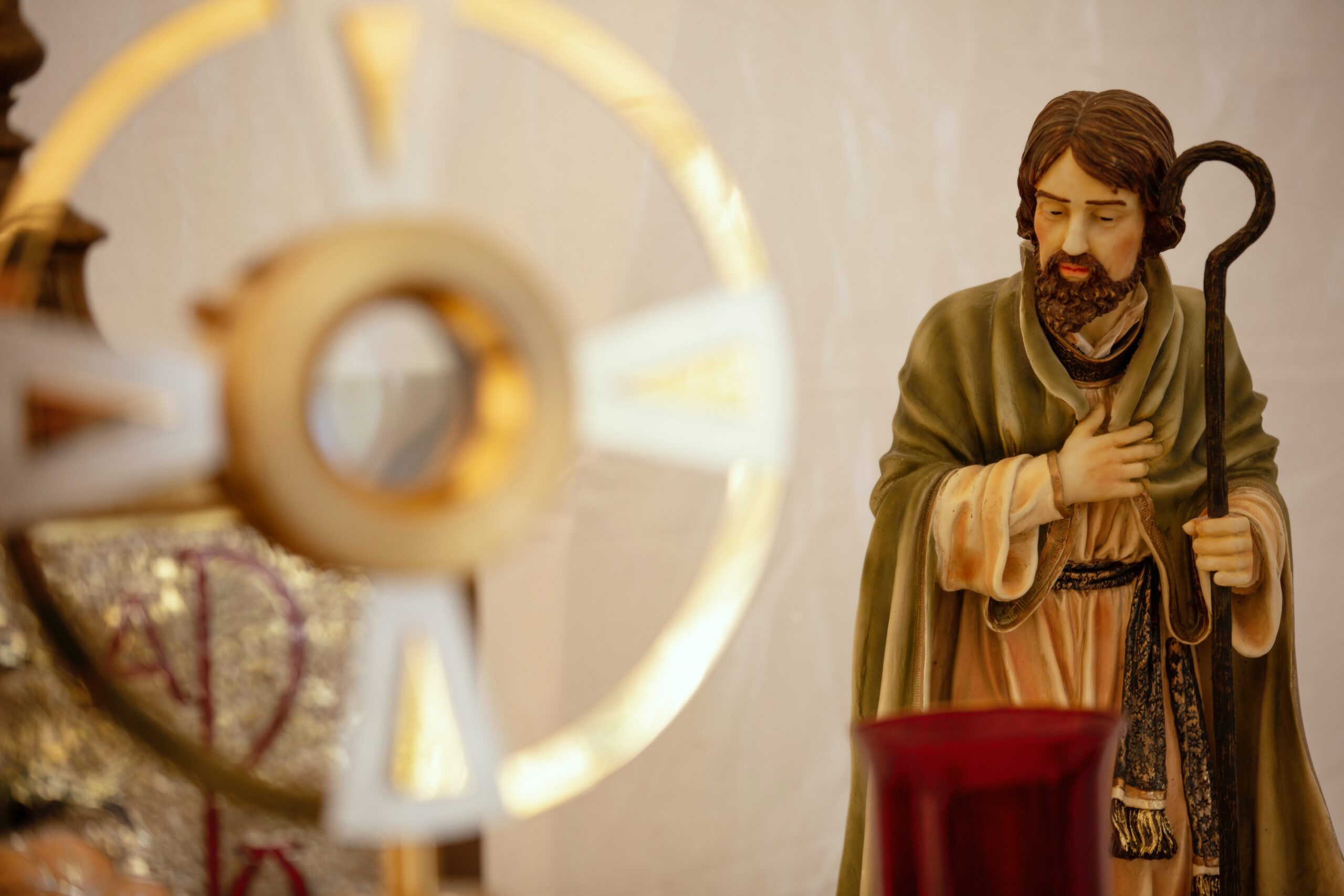
    Have you ever wondered what it would be like to pray the rosary with St. Joseph, the earthly father of Jesus and the spouse of Mary?

    I have.

    And I want to share with you a personal experience that changed the way I pray the rosary.

    But before I do that, let me tell you that I am not a mystic who has seen a vision of St. Joseph.

    What I am going to share in this article is a diary entry I wrote back in May 1, 2018, in the hopes that this would help at least one soul pray the rosary better under the guidance of our spiritual father, St. Joseph.

    Here’s how it happened.

    I was waiting for my turn at the local barbershop after attending Mass. Out of the blue, amidst the mundane hustle and bustle, I felt a strong urge to pray the Rosary.

    Have you ever had that feeling?

    A sense that someone is gently nudging you towards something?

    That’s what happened to me.

    It was as if St. Joseph himself was whispering in my ear, “Grab the beads; let’s pray together.”

    Surrendering to this heartfelt call, I started praying discreetly while waiting. I became so engrossed in the mysteries of the Rosary that it felt like I was witnessing those holy events right before my eyes.

    It was like watching a movie!

    For many years, I kept this reflection to myself because I didn’t want to sound weird. But I’ve been moved to share it now, with the hope it might help even one person connect more deeply with the Rosary.

    As a former anti-Catholic Protestant, I know how people struggle in understanding how to pray the rosary and why we do it in the first place. Perhaps I should write a separate article for that.

    Why You Should Pray with St. Joseph

    You might be wondering why you should pray with St. Joseph when he is not even mentioned in the rosary.

    The answer is simple: because he was there.

    He was there when Jesus was born in Bethlehem. He was there when Jesus was presented in the temple. He was there when Jesus was lost and found in Jerusalem. He was there when Jesus grew up in Nazareth.

    He was there for Mary and Jesus in every moment of their lives, even if he did not live to see the Crucifixion and Resurrection of Christ.

    He was there as a faithful husband, a loving father, and a humble servant of God.

    He was there as a witness of God’s love and mercy for us.

    And he is still there for us today as our patron and protector.

    So, what better way to pray the rosary than with St. Joseph, who knew Jesus and Mary more than anyone else?

    How to Pray with St. Joseph

    To pray with St. Joseph is to enter his heart and mind, to discern his emotions, thoughts, and actions as he journeyed through Christ’s life with Mary. It invites us to seek his help in deepening our understanding and love for Jesus and Mary.

    Below, I share personal reflections about St. Joseph to consider while praying each of the Sorrowful Mysteries. I hope they inspire you to create your own connections across all other mysteries.

    The following reflection notes were recorded while praying the rosary at the barbershop. It’s not heavily edited to give you a sense of what I was thinking right at that very moment without much filters.

    Notice that some of these reflections are addressed to Jesus or Mary – there’s no hard and fast rule for this. What is important is our minds are focusing on the life of our Lord and see it unfolding before our eyes that it might move us to a deeper sense of wonder and contemplation.

    The Agony in the Garden

    Joseph did not live to see the Crucifixion of Christ and our Lady’s extreme agony. But, as chosen by God, he wasn’t exempt from the agony and joy that his vocation entailed – his faith was also tested.

    Joseph, It could have pained your heart to see Our Lady so anxious and devastated at the sudden disappearance of Our Lord when He was 12. Your heart was broken and tears were about to flow from your eyes. “Where’s my son?”

    But Joseph, you didn’t want to cry.

    Your wife was so distraught and all the more she needed you.

    Suddenly, you remembered how you brought your family to Egypt. You have remembered what the angel told you in a dream. You remembered what Simeon told you and your Lady.

    While searching caravans after caravans for days, your heart began to be more troubled. But unfazed by that anxiety, you chose to trust in the Lord… You chose to say to Him what your wife has told God more than a decade ago: fiat.

    Joseph, pray for me that I may trust in God’s will even when I don’t understand it. Teach me to say yes to God even when it hurts.

    The Scourging at the Pillar

    Every blow to His body pierced her heart more and more. Pain, agony, and suffering – no words can describe what Mary would have felt that day. Our Lady saw it all and never did she feel any sorrow more than that. Her own Son, whom she protected from all harm, now being whipped in front of her.

    My Mother, if only you could feel the consoling embrace of St. Joseph.

    If only he could embrace you and ease the pain of your heart.

    Perhaps from Heaven, you, dear Joseph was seeing all that was taking place.

    How you have wished that you could be with her on those dark and trying moments, but all you could do was pray for your holy family.

    Our Lady was all alone, crushed by grief and the indifference of people. I came closer and hugged her. Both of us watched how God’s love unfolded before our eyes drenched with tears. I, too, cannot hold myself anymore. Our Mother silently cried, perhaps even with human difficulty, she tried remembering the promises of God. I cried and cried with her, marveling her faith and learning to trust God even more…

    Joseph, teach me to accept God’s plan even when it seems unfair. Teach me to see God’s love even when it seems hidden. Teach me to worship God even when it seems difficult.

    The Crowning with Thorns

    Our Lady closely followed You, dear Lord. I, too, despite the tiredness and hopelessness, chose to follow you, my King.

    Now, Your body is so weak, your flesh already protruding, but your love was never crushed. The king and the soldiers reviled You, treated you as a lunatic or the worst criminal. They spat on you and mocked you. Lord, your father and lord, never allowed even a fly to touch you.

    Now, they have insulted You and hurt You. The robe and the crown were nothing but sarcasm and indifference.

    Throughout the Lord’s childhood, St Joseph has protected Him with all his being. He was not only his Son, but also his King and more importantly His God.

    The Lord was once a vulnerable and powerless babe in your venerable hands, dear Joseph. What an honor and responsibility it was to be entrusted with the King, Lord, and Savior of the world. Through your and your Spouse’s intercession, may we glorify and exalt Jesus Christ in our lives as Savior and King.

    Joseph, teach me to be humble in my work and in my life. Teach me to use my gifts for God’s glory and not my own. Teach me to honor Jesus as my King and my Lord.

    The Carrying of the Cross

    Christ, with body that’s almost giving up but with mercy that will never surrender, carried the tree of His death on the streets where He used to teach, feed, and heal.

    Our Lady followed Him along the path, sharing in His pain and sorrow. She wanted to help Him carry the cross, to lighten His load, to ease His burden.

    But she couldn’t. She had to let Him carry it alone. She had to let Him offer it for us.

    She had to let Him love us.

    Oh, dear Joseph, as a man I knew how you wanted to be the one to suffer instead of your son.

    And yet in this full display of evil, you choose the path of trust and obedience to the divine plan of God. Help me to do the same. Help me to carry my own cross to the ends of the earth that I may fully follow your Son in total surrender.

    Now, it’s your turn.

    Now, you may wonder why I didn’t include a reflection on the last sorrowful mystery.

    It’s because during that time I was already called by the barber and I didn’t get to continue typing although I continued praying. I was thinking of continuing and finishing the reflections before I publish this.

    However, I also thought of giving you, my reader, the chance to write your own reflection.

    Imagine yourself being in the Crucifixion. What do you think Joseph would have felt? What about Mary? Most importantly, what about you?

    I hope these reflections ignite in you a deeply personal way to pray the Rosary, imbuing it with more intention, more passion. Let’s invite St. Joseph into our prayers and let him guide us towards a more profound bond with the Holy Family.

    What are your personal rosary reflections? Share it with everyone by commenting below.

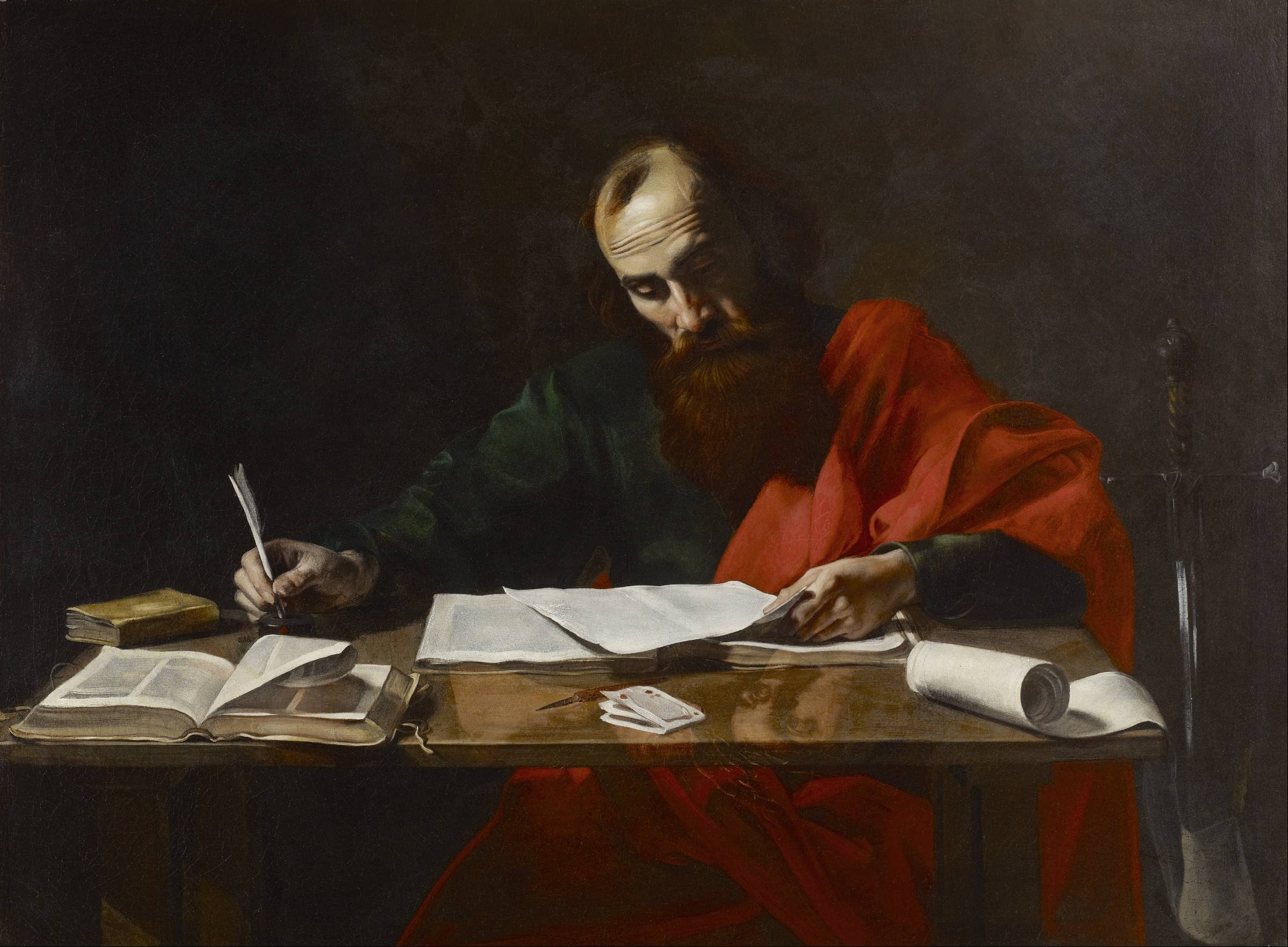
  • Was Saint Paul a Catholic?

    Was Saint Paul a Catholic?

    This article is based from the live broadcast discussion (in English and Filipino) on Unboxing Catholicism Live. Part 2 of this series will go on-air on March 5, 2023 (Sunday) at 8 pm, Manila Time.

    Saint Paul, one of the most prominent figures in the New Testament, is often cited by both Catholics and Protestants as a key source of Christian doctrine. However, there is a longstanding debate about whether Saint Paul can be considered a Catholic. 

    Protestants often claim that Saint Paul’s teachings contradict Catholic dogma, while Catholics maintain that he was indeed a Catholic and that his writings are consistent with Catholic teachings. 

    In this Unboxing Catholicism Apologetics tract, we will examine the evidence for and against the idea that Saint Paul was a Catholic, and we will address some common misconceptions about his writings that have led to confusion among Protestants.

    Protestant Claim #1: Saint Paul was an independent church planter and did not need an organized religion because religion is not important.

    Protestants may argue that Saint Paul’s direct calling from Christ to conversion implies that he did not need an organized religion. However, this claim is not entirely true. In Romans 10:15, Saint Paul acknowledges that preachers need to be sent in order to preach the gospel: “And how can men preach unless they are sent?” Even Jesus Himself was sent by the Father (John 20:21), and Jesus sent the Church (Matthew 16:18-19).

    Moreover, Saint Paul consulted the apostles about his preaching, as seen in Galatians 1:18-19 and Galatians 2:1-10, to ensure that he was not running or working in vain. In Acts 15, we see how Saint Paul consulted with the apostles about the issue of circumcision and was sent by them to deliver the decision to the Gentiles.

    Saint Paul also taught about the various ministries within the Church and emphasized the importance of organization within the Body of Christ. In Ephesians 1:22-23, he wrote, “And he put all things under his [Christ’s] feet and gave him as head over all things to the church, which is his body, the fullness of him who fills all in all.” Here, Saint Paul referred to the Church as the body of Christ, with Christ as the head. 

    In Ephesians 4:15-16, he wrote, “Rather, speaking the truth in love, we are to grow up in every way into him who is the head, into Christ, from whom the whole body, joined and held together by every joint with which it is equipped, when each part is working properly, makes the body grow so that it builds itself up in love.” This passage emphasizes the importance of each member of the Church working together properly to build up the body of Christ.

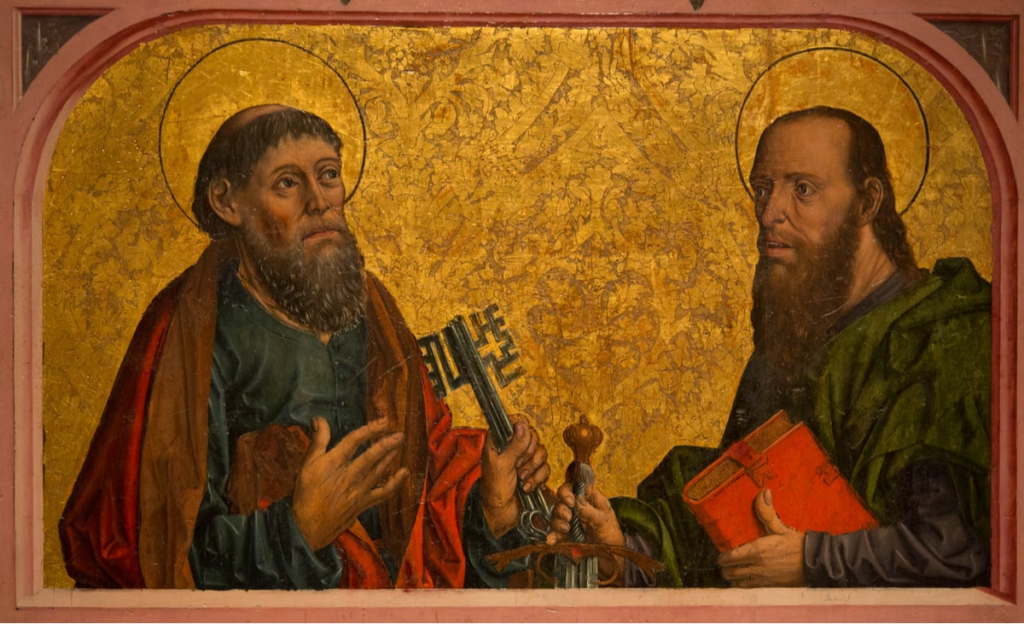
    Saints Peter and Paul, two pillars of Christianity.

    Protestant Claim #2: Saint Paul didn’t treat St. Peter as the Pope. In fact, he “opposed him to his face.”

    St. Paul’s disagreement with St. Peter has been used by some Protestants to argue that Peter was not the Pope or had no authority over the other apostles. However, it is important to understand the context of their disagreement. In Galatians 2:11-14, St. Paul recounts how he had to correct St. Peter’s behavior in Antioch. At the time, some Jewish Christians believed that Gentile converts needed to follow Jewish customs, including circumcision, in order to be saved. St. Peter had previously eaten with Gentile Christians, but when these Jewish Christians arrived, he separated himself from the Gentiles, which led to confusion and division. St. Paul confronted St. Peter about this hypocrisy, arguing that it was contrary to the Gospel and would lead others astray. The issue here was not about Peter’s authority or doctrinal teachings, but his misbehavior towards Gentile Christians.

    In fact, St. Paul was just urging St. Peter to follow what he himself has infallibly taught in the Council of Jerusalem in Acts 15!

    Protestant Claim #3: Saint Paul preached the idea of basing Christianity from “Bible alone” or “sola Scriptura.”

    The Protestant claim that St. Paul relied only on the Bible as his sole authority is based on a misunderstanding of several key passages in his letters. One of the proof-texts often cited is 2 Timothy 3:16-17, where Paul writes that “All Scripture is God-breathed and is useful for teaching, rebuking, correcting and training in righteousness.” However, this verse does not say that Scripture is the only authority or that it is sufficient in and of itself. In fact, when Paul wrote these words, there was still no New Testament canon, and he likely had in mind the Jewish Scriptures or Old Testament.

    Furthermore, Paul himself recognized the authority of the Church, which he described as “the pillar and foundation of truth” in 1 Timothy 3:15. This means that the Church is entrusted with the task of preserving and passing on the truth of the faith. This includes the interpretation of Scripture, which is not a matter of private judgment but of the Church’s authoritative teaching.

    Another verse that Protestants often use to support their claim is 1 Corinthians 4:6, where Paul writes, “I have applied these things to myself and Apollos for your benefit, brothers, so that you may learn from us not to go beyond what is written, so that none of you will be inflated with pride in favor of one person over against another.” However, this verse is not a rejection of tradition or the authority of the Church. Rather, Paul is cautioning the Corinthians against pride and division, which had led them to follow different leaders and boast about their spiritual gifts. He is reminding them to stick to the basics of the faith and not to get caught up in rivalries or factions.

    In other passages, Paul explicitly appeals to tradition and the oral teaching of the apostles, as in 2 Thessalonians 2:15, where he urges the Thessalonians to “stand firm and hold fast to the teachings we passed on to you, whether by word of mouth or by letter.” Similarly, in 1 Corinthians 11:2, he commends the Corinthians for “maintain[ing] the traditions even as I delivered them to you.” These passages show that Paul did not see Scripture as the sole source of authority but recognized the importance of the Church’s teaching and tradition.

    Finally, in Ephesians 3:10-11, Paul emphasizes the role of the Church in revealing the wisdom of God to the world, highlighting the Church’s authority and importance. He writes, “so that through the church the manifold wisdom of God might now be made known to the rulers and authorities in the heavenly places. This was according to the eternal purpose that he has realized in Christ Jesus our Lord.” This passage underscores the fact that God’s plan for salvation is carried out through the Church, and that the Church is the means by which God reveals his truth to the world.

    The question of whether Saint Paul was a Catholic has long been debated by Catholics and Protestants, with the latter often citing his teachings as contradictory to Catholic dogma. However, the evidence suggests that Saint Paul was indeed a Catholic. Protestants argue that Saint Paul did not need organized religion, but he acknowledged the need for preachers to be sent, consulted with the apostles, and emphasized the importance of organization within the Body of Christ. St. Paul’s disagreement with St. Peter was not about the latter’s authority but about his misbehavior towards Gentile Christians. The claim that St. Paul relied only on the Bible as his sole authority is based on a misunderstanding of several key passages in his letters, and he himself recognized the authority of the Church, which he described as “the pillar and foundation of truth.” In conclusion, Saint Paul was a Catholic, and his writings are consistent with Catholic teachings.

    Watch this discussion (in Tagalog English) on our YouTube Channel.

    Blog article prepared by Voltaire delos Reyes, Bernz O. Caasi and Unboxing Catholicism Staff.

  • Ano ang gusto mong i-unbox?

    Ano ang gusto mong i-unbox?

    Ano ang gusto mong i-unbox?

    Hey, Unboxer!

    We did it!

    Isang buong taon natin in-unbox ang Bibliya mula sa Genesis. 

    Pinag-aralan natin ang kwento ng ating kaligtasan mula kay Adan hanggang kay Hesus. Watch the replay here. You may also listen to the audio version here.

    Now we need your help para malaman natin kung ano ang topic na gusto mong gawan natin ng bagong series sa Unboxing Catholicism Podcast.

    Please let us know by voting below. 👇

    [wpforms id=”25477″ title=”false”]

  • Do you want to get in shape? Embrace the struggle.

    Do you want to get in shape? Embrace the struggle.

    [et_pb_section admin_label=”section”] [et_pb_row admin_label=”row”] [et_pb_column type=”4_4″][et_pb_text admin_label=”Text”]

    Okay, you didn’t stumble upon a fitness section in Unboxing Catholicism. 🤣

    This article is not about a new workout regimen. 

    I want to share with you some things I’ve realized as I was doing my prayer this evening. 

    This week, I’ve encountered people with a lot of struggles

    You may be one of them.

    One new friend whom I have never met yet was diagnosed with clinical depression. 

    One friend lost an uncle who was abandoned by his children.

    And very recently a close friend has confided in me how he’s been stuck and having a hard time with his business.

    Many times, when my friends tell me about their problems, I wish had all the right words to say to make them feel better.

    But more often, all I can offer them are my prayers and my presence.

    Struggle in Little Things

    When I talk to Our Lord about these many souls, my own sufferings and struggles also come to light. 

    And then I would realize that we’re all in the same boat. 

    We’re all on the same journey.

    We may have different experiences but one thing is for sure, at one point in our lives we have faced many difficulties.

    And while the world offers us the promise of comfort, an emancipation from all kinds of pain, our faith teaches us that suffering is the stuff that would make us saints.

    St. Josemaria Escriva said it simply but beautifully: “Every athlete trains to stay in shape. We stay in shape if we struggle in little things… Life has all the beauty and joy of a sport.”

    My friend, perhaps like many of us in Unboxing Catholicism community, I am not the “sporty” or “athletic” kind of guy.

    But St. Escriva’s comment was very true.

    Photo by Chander R on Unsplash

    Sporting Spirit to Be a Saint

    I remember my college varsity friends training day in and day out whether there’s a competition or it was just an ordinary day.

    It’s not that they sought suffering.

    But they knew that suffering is part of being an athlete.

    We may not be competing formally in any sport, but aren’t we all in this supernatural Olympics where the crown of heaven awaits us?

    Didn’t God call us to have a sporting spirit to be a saint?

    Perhaps today, our Lord is encouraging us to sacrifice a little more, knowing that He will only allow us to fight battles we could win.

    Perhaps during this month of November, our Lord is inviting us to offer our inconveniences – big or small – to the holy souls in purgatory.

    Perhaps Jesus is calling us to be more understanding; to smile even if we don’t feel like it; to do our duty of the moment even if it’s hard.

    Called to Communion

    My friend, I also realized that just as an athlete doesn’t train himself alone, we  cannot be lone ranger Christians.

    Just as our ultimate end is communion with Him, our Lord is also inviting us to grow in our communion with others in the Church.

    As we face many trials in our lives, may we remember that you are never alone.

    Christ and His Church, with all the angels and saints are cheering you on wherever you are in your journey today.

    Therefore, whatever you’re going through right now, let us run with perseverance the race that is set before us.

    I pray for your breakthroughs in all aspects of your life.

    May you find peace in His promise and healing in His grace.

    Prayers

    As you end reading this, please also pray for the many people who send us via email and social media their stories, prayer intentions, and questions about the Catholic faith.

    Please pray for my personal intentions as well:

    • that our planned projects in Unboxing Catholicism (books, online courses, events, podcast series) may continue reaching more souls around the world – we’re now 16k+ in the email list!
    • that our app Hallow may continue touching more souls and help everyone pray and find peace in God – we have more than 5 million downloads as of today, 500k+ are Filipinos!
    • that I may help more families as a financial planner – I am writing a book about this and launching a podcast, too!

    Do you want more?

    And if you were blessed by this article and you want to receive more personalized messages, tips, and other resources from Unboxing Catholicism, please subscribe to our email list by downloading our starter guide on apologetics and evangelization – it’s completely free.

    Although my replies are delayed, rest assured that I read all the emails being sent to us.

    Till the next article! 

    Let’s continue unboxing the faith and defending it clearly without being preachy. 

    [/et_pb_text][/et_pb_column] [/et_pb_row] [/et_pb_section]