Author: Bernz Ordoñez Caasi

  • Reflections on the state of the church today

    Reflections on the state of the church today

    This post is solely for the members of the Unboxing Catholicism Community DSR Volunteers. Please don’t share outside our group. 🙂

    Hey, Unboxers.

    I don’t share this publicly but since you’re family, I will share it here as a reflection on your exchanges in our group chat earlier (July 25, 2021) 🙂

    When I returned to the Church after becoming an anti-Catholic Protestant, I knew “what must be done/believed in” because of the formation I didn’t deserve but nonetheless I have received from my friends who painstakingly accompanied me in my faith journey. 

    Because I had the vision of “ideal practice of the faith”, I struggled making sense of two things that scandalized me as a revert/convert:

    1. Catholics – lay or ordained – criticizing each other online. 
    2. Priests not preaching about the sacraments of confession and the Eucharist on their homilies.

    Scandalized by divisions.

    For #1, I was shocked because one of the things that made me Catholic is the “certainty of the faith” given to us by the Scriptures and Tradition AUTHORITATIVELY (not authoritarian) interpreted by the Living Magisterium of the Church. 

    As a Protestant back then, I had friends who chose which “Christian teachings” they would follow because they feel like it’s good for them.

    I thought that Christianity was a menu that I could customize according to my own preferences.

    I don’t have space here to geek out on what I realized in #1, but I thought back then that IF I HAD met Catholics who are always on the mode of “finding faults” and “criticizing others,” PERHAPS I WOULD HAVE RECONSIDERED becoming a Catholic again. 

    My thinking was very simple: “Kung ganun rin pala ang mga Katoliko sa loob ng Simbahan nila – nag-aaway at hindi nirerespeto ang Santo Papa nila, bakit pa ako magiging Katoliko? Anong kinaiba ng pinapakita nila at pag-iisip nila sa mga Protestante?”

    My thinking was very simple: “Kung ganun rin pala ang mga Katoliko sa loob ng Simbahan nila – nag-aaway at hindi nirerespeto ang Santo Papa nila, bakit pa ako magiging Katoliko? Anong kinaiba ng pinapakita nila at pag-iisip nila sa mga Protestante?”

    I saw how that bad example could make it more difficult for non-Catholics like I was to see the beauty of the faith beyond the issues. A Protestant friend just said: “Kayo-kayo mismong Katoliko nag-aaway eh. Ano mapapala ko kung makikigulo pa ako?” 

    Case closed. He was already not willing to listen in the dialogue. 

    Napaisip ako kung ilan pa katulad niya na ganun rin ang iniisip. . 

    Eventually, nasanay na rin ako, and I realized that even though the Bible (both Old and New Testament) taught the primacy of Church authority, guided by the Holy Spirit, as the final arbiter of religious truths and practices, there will be Catholics who will oppose because of human freedom and different degrees of formation/discernment. 

    I also learned to recognize their positive intent – that’s to point out what could be better in the Church. They simply react to issues as activists would react to political errors of the government. 

    But then I also realized after a while that the Church is not supposed to be seen only through the lens of politics and secular government.

    It’s more special than that. It’s more divine than that.

    It’s a FAMILY that God redeemed with His very blood. 

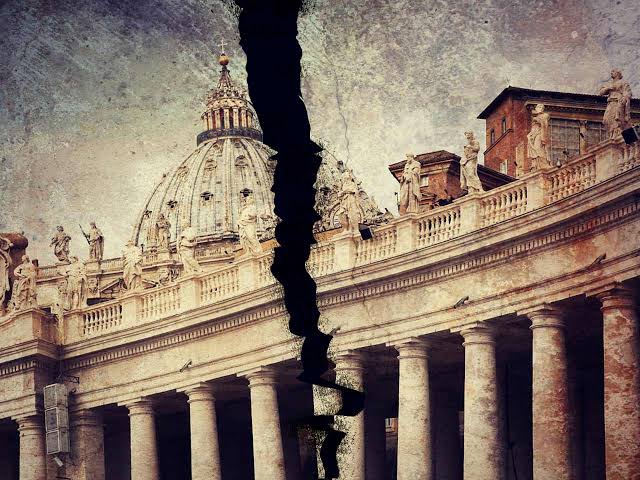
    It’s HIS BODY that we’re TEARING APART when we quarrel with one another. 

    It’s HIS FACE that we tarnish when we don’t give good example.

    Until now I am deeply saddened that we are a family so divided, always washing our dirty linens in public.

    Imagine posting on social media your issues with your mom, dad, and your siblings.

    Does that feel right? What would other people from other families think?

    Whatever happened to John 17:20-22? Are we willing to die for that?

    The Devil is so happy for after all, “diabolos” means “to divide,” “to separate,” “to throw against.”

    You know what’s ironic, I feel into the same temptation that I’ve described in #1!

    I tremble whenever I meditate on Matthew 12:22-28. I hope you can pray about this passage and see it happening in the Church today.

    The religious people accused the Lord for being that of the Devil. Notice what the Lord said, knowing what was in their hearts.

    Let us guard our hearts. It’s the citadel of our interior life.

    Scandalized by the priests.

    For #2, there was a long period of time that I would be really really mad and sad to the point of breaking down whenever a priest would not take advantage of “teaching moments” that the readings of the Mass could have given him. 

    Example: there was one time when the Gospel was John 20 – about confession.

    The priest gave a homily with a totally unrelated angle/story to the essence of the gospel.

    When he finally said that “we must repent,” I thought he would already mention “confession” because as far as our Catechism is concerned, that’s the concrete application of contrition. 

    When the Mass ended, he said “Uy may nakalimutan ako.”

    I thought he will finally mention the “how” of returning to the Lord, however, he said: “Sana makabili po kayo ng kalendaryong binibenta sa patio ng Simbahan.”

    I went home that night, complaining to my mom, complaining to my mentors, complaining to my friends – my spiritual directors. I was at the verge of posting long rants on social media.

    I opened Word and drafted “An Open Letter to the Filipino Priests – from a Former Protestant.”

    I started writing all the faults I could find and all the missed opportunities these priests could have had IF THEY ONLY preached well.

    I was so mad. So furious that I really wanted to publish it and even print it and give it to all diocesan priests I knew. 

    Until I realized that I let my anger got the best of me. 

    I forgot to pray.

    I forgot to ask our Lord what He would have done if he were in my position. 

    I also realized how arrogant I was that I only saw the mistakes of the priests, but I didn’t take into consideration the other good things he has done for their parish (not my parish). 

    I saw the log in someone else’s eyes without seeing my own.

    I realized that during that Mass, instead of allowing the Lord to heal me and enlighten me, I was like that Pharisee praying: “Buti pa ako walang kasalanan.”

    Instead of “waiting on the Lord,” I was waiting for the priest to commit more mistakes – this time in his bowing, genuflecting, pronunciation, everything!

    The Conversation that Converted Me (Again)

    I cringed at how self-righteous I was, and I started contacting my friends to ask for guidance on how I should process my experience. 

    One of my mentors told me, “Instead of publicly criticizing priests who don’t teach about confession, why don’t you pray to our Lord for opportunities to allow you to share with people the beauty of confession – share about parishes that have regular confessions. Feature them. Help the priests see what they could be doing. Encourage people to learn about the Sacraments.”

    He then told me of the silent apostolate being done by the Members of the Priestly Society of the Holy Cross.

    I was encouraged to see another way of addressing my concerns.

    That conversation led me to a deeper conversion.

    It was one of the things which led me to really seek how to defend the faith clearly without being preachy.

    At first I was not satisfied with it. I wanted a quick-fix solution.

    Yung tipong next week pagpunta ko sa Church, mapapasabi ako: “Mabuti, natuto rin si father.” (Cringe!!!)

    But then again, I had to struggle in rectifying my intentions. Pride is a huge enemy to our progress in the spiritual life. St. Josemaria urged us to always have that in check without becoming paranoid or scrupulous. 

    Instead of publishing the “Open Letter,” I made it a point to befriend our priests in whatever ways I could.

    These encounters led me to eventually telling them of my frustrations about confession.

    I told my parish priest and others of the same thing, and ironically my parish priest even asked me to give a talk in the parish where I shared about confession.

    Some of them have apologized on behalf of their brother priests, informing me that they thought “people already knew what to do.”

    I realized how limited my view was. I was judging the priests from what I know the books were teaching, but I didn’t give myself a chance to encounter them where they were – to dialogue with them and see their own worries and concerns.

    I cage them in the limitations I have mentally created for them.

    I am not excusing them.

    I am just sharing on my realizations on a third way we could discern.

    Way # 1: Be silent and ignore all the problems of the Church and sing kumbaya.

    Way # 2: Chastise all the erring Catholics in public as if we’re the most perfect saints on earth.

    Way # 3: Recognize our own need for grace/conversion while helping the Church one soul at a time, all dependent on His grace – doing it not because we are the best and the strongest, but precisely it is because we are weak and in building up others we acquire the grace of strenght – the perseverance of the saints.

    I understand that for many learned Catholics, issues on the liturgy are trigger-worthy and disheartening.

    It is my prayer that we can all have the courage and humility to ask our Lord: “which way do you want me to go?”

    You don’t have to have the answers today.

    The more important thing is you’ve started discerning now.
  • Two Palm Sunday reflections to think about during Holy Week and beyond

    Two Palm Sunday reflections to think about during Holy Week and beyond

    [et_pb_section fb_built=”1″ admin_label=”section” _builder_version=”3.22″][et_pb_row admin_label=”row” _builder_version=”3.25″ background_size=”initial” background_position=”top_left” background_repeat=”repeat”][et_pb_column type=”4_4″ _builder_version=”3.25″ custom_padding=”|||” custom_padding__hover=”|||”][et_pb_text admin_label=”Text” _builder_version=”4.9.2″ text_font=”Raleway||||||||” text_text_color=”#000000″ text_line_height=”1.5em” header_font=”Raleway|900|||||||” header_text_color=”#8C0000″ background_size=”initial” background_position=”top_left” background_repeat=”repeat”]

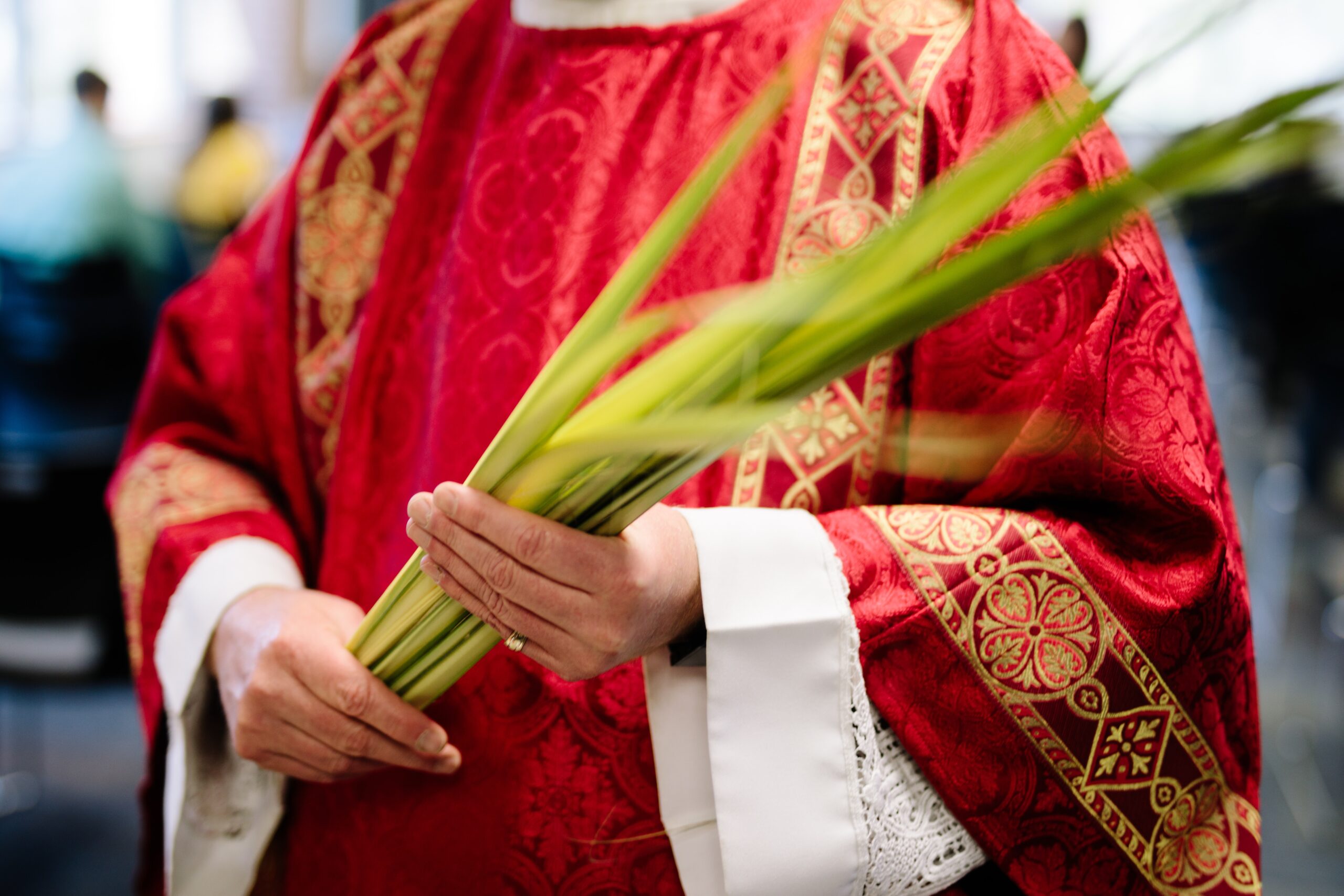
    The entry of Jesus in Jerusalem on Palm Sunday was marked by so much theological significance. The use of the donkey, the shouting of Hosanna by the Jewish crowd, and the laying of cloaks along the roads to welcome our Lord were all echoing Old Testament events and prophecies.

    These parallelisms were explained in the podcast. 


     Jesus is King

    Jesus was clearly communicating a message: He is the King. 

     Is He also our King? Do we allow Him to lord over our lives?

    It is also interesting how he seemed to fear his impending passion when He prayed to the Father at the garden of Gethsemane. For sure, He felt the pain of His upcoming suffering. And yet, his human will was so united to His Divine will that he said thrice to the Father: “May Your will be done.”

    The Agony of Jesus and Mary

    Mary, even she wasn’t in the garden with Jesus, was in deep sorrow during that night. She, too, must have been worried about her son. She must have felt that Her sone was in agony just as a mother would always know what’s wrong with her son. Like Jesus, she must have also renewed her commitment to God that night – as she did so 33 years ago: “Be it done to me according to your word.”

     The second half of the podcast episode explores this theme and what we can learn from it. Listen to the full episode and immerse yourself in reflection. This Holy Week has the power to transform us if we will only allow our Lord to stir our souls. Let’s keep praying for one another. 

     Resources Mentioned:

     Jesus of Nazareth (Part Two) by Pope Benedict XVI 

    [/et_pb_text][/et_pb_column][/et_pb_row][/et_pb_section]

  • Is Catholicism just a bunch of rules?

    Is Catholicism just a bunch of rules?

    Is Catholicism a religion of rules? Why does the Church tell us what we should or shouldn’t do? What’s the purpose of following rules? What’s the point of the Catholic faith?

    These are the questions we will explore in this episode of Unboxing Catholicism.

    Wherever we go, there are  rules.

    • Our families have rules.
    • Our schools/offices have rules.
    • Our countries have rules.
    • Our physical bodies have rules.
    • Nature has rules or laws. Gravity.

    We need to be thankful for these rules because they help us maintain stability, safety, order, and it’s for us. Now, bringing this to the realm of faith and spirituality, it’s the same thing. All religions – including Catholicism – have rules. And this brings us to our next point of reflection.

    Rules are not ropes. They exist for a reason.

    The Catholic faith, just like all Christian denominations, has rules, but they’re all about two things. Commandment: love God and Love others. Matthew 22:36-40.

    In the case of our Catholic faith, some rules exist to make us holy – because this is the main objective of Christianity – to help us attain eternal happiness and holiness in heaven.

    Did you know that there are really only six precepts/rules that the Catholic Church instituted for Catholics to adhere to – these are based on biblical teachings?

    • Attend Mass on Sundays and Holy Days of Obligation. This is what is due to God.
    • Attend Confession once a year. We all need healing from our sins.
    • Receive the sacrament of the Eucharist at least once during the Easter season. Just as we eat food for our bodies, our souls need nourishment.
    • Observe the days of fasting and abstinence established by the Church. We discipline ourselves and practice detachment for the sake of our Lord and others.
    • Help provide for the needs of the Church. It doesn’t always have to be money. It could be time, talent, and treasure.
    • Observe the Church’s marriage laws. Marriage, as our faith teaches us, is a sacrament instituted by God and therefore its laws come from Him.

    The Church also has moral teachings on sexuality and family for in her 2,000-year history, she is aware of the different issues anyone can run into regarding those. Think of the Church here as a grandmother – ever old and ever new – imparting timeless wisdom. Instead of criticizing her conservative views and hurling at her various labels, let’s try to open our minds and listen to what she has to say.

    And we don’t understand, ask other members of the Church – we are a family. We seek to understand one another. We go to the love story of our Father – the Bible and we see how our ancestors – the first Christians – addressed the questions of our time. We are blessed also to have the internet and the Catechism at the click of our fingertips.

    Catholicism is not centered on rules; it’s about relationships.

    Jesus didn’t come to abolish religion, but he redeemed it from the legalism of Pharisees and fulfilled its purpose. Matthew 5:17 (not abolish but fulfill).

    GK Chesterton: Let your religion be less of a theory and more of a love affair.

    As Pope Francis and his two immediate predecessors repeatedly stated, our Catholic Christian faith is not just an idea. As a saint put it, “Christianity is not a collection of truths to be believed, rules to be followed, or prohibitions. Seen that way, it puts us off. Christianity is a person who loved me immensely, who demands and claims my love. Christianity is Christ.”

    Therefore, we must take all possible means and opportunities for us to deepen this personal relationship with Christ – through prayer and the Sacraments which allow us to encounter our Lord in the most profound way.

    We have to realize that Catholic teachings are not just high moral standards that are impossible to attain – they are chapters in a beautiful romance with a merciful God – and all of us are invited to participate and find true, everlasting joy in it!

  • #RealTalk: How well do we know and study our Catholic Faith?

    #RealTalk: How well do we know and study our Catholic Faith?

    [et_pb_section fb_built=”1″ admin_label=”section” _builder_version=”3.22″][et_pb_row admin_label=”row” _builder_version=”3.25″ background_size=”initial” background_position=”top_left” background_repeat=”repeat”][et_pb_column type=”4_4″ _builder_version=”3.25″ custom_padding=”|||” custom_padding__hover=”|||”][et_pb_text admin_label=”Text” _builder_version=”3.27.4″ background_size=”initial” background_position=”top_left” background_repeat=”repeat”]

    In the previous article, we saw that evangelization or the sharing of our Christian faith is the primary mission and vocation of all baptized Catholics. Now, let us sincerely examine ourselves in this first of three articles in the #RealTalk series.

    Do we use our compass?

    Ancient travelers who didn’t have a map while traveling still reached their destination since they had a compass that pointed them in the right direction. Even if terrains had changed and their maps got outdated, their compass was still useful since the north will remain north

    In a similar way, our Catholic faith anchors us on unchanging truths about God, man, and our eternal destination. However, it is a sad reality here in the Philippines that not many Catholics are knowledgeable about those truths – the teachings of the Faith (the compass). 

    Many are lost because times and terrains have changed, but we Catholics still don’t know how to use our compass to find the true north. Many others would even throw the compass away by leaving the Church.

    Do we know why the Church is not in favor of divorce? What about same-sex marriage and other moral issues of our time? 

    Do we honestly try to understand the wisdom behind those teachings? Or do we just dismiss the Church as an irrelevant artifact?

    Are we just going through the motions?

    Many Filipinos have memorized their inherited pious traditions but many tend to simply go with the motion. I used to be like that before I became a Protestant. I left the Church before because I didn’t really understand it.

    That should not be the case, the Catholic faith is so rich and beautiful that one who does not honestly examine the truths it is proclaiming is clearly missing a lot – his salvation can even be at stake! 

    Our Lord doesn’t want us to just go with the flow and be passive practitioners of our faith. We must understand what we believe in as Catholics so that we can clearly explain and defend it. As St. Josemaria Escriva said, “Ours should be the piety of children and the sure doctrine of theologians.”

    We cannot give what we do not have. Evangelization needs formation.

    Time for sincerity

    Let us be honest with ourselves and ask the following:

    • How well do I really know our faith? Do I seek to understand our traditions in the light of the Scriptures and the teachings of the Church?
    • Do I read the life of our Lord in the Gospels?
    • Do I read articles that could enlighten me on the issues about our Faith today?
    • Have I ever read the Catechism of the Catholic Church?
    • Do I ask our priest or a spiritual mentor for practical tips on how I can grow deeper in my Catholic Christian faith?

    A New Year’s Resolution

    Let us not be “prophets of doom” who think that the Catholic Church is beyond hope. As we honestly examine ourselves and see our deficiencies in fulfilling our divine call to evangelize, we can take advantage of the upcoming year to begin again.

    In the next articles of this series, we will discuss other practical tips for us to know more about our faith so we can explain it clearly without being preachy.

    For now, let us think of this: what actions will I take to apply what I’ve realized after reading this article?

    Here’s one important action you could do NOW

    Subscribing and being part of our community is your first step in the exciting journey of being a witness of Christ to all men (Acts 22:15).

    Got thoughts? Bless others by sharing them in the comments section below.

    [/et_pb_text][/et_pb_column][/et_pb_row][/et_pb_section]
  • Why Evangelization Should be a Catholic Thing

    Why Evangelization Should be a Catholic Thing

    [et_pb_section fb_built=”1″ admin_label=”section” _builder_version=”3.22″][et_pb_row admin_label=”row” _builder_version=”3.25″ background_size=”initial” background_position=”top_left” background_repeat=”repeat”][et_pb_column type=”4_4″ _builder_version=”3.25″ custom_padding=”|||” custom_padding__hover=”|||”][et_pb_text admin_label=”Text” _builder_version=”3.27.4″ background_size=”initial” background_position=”top_left” background_repeat=”repeat”]

    A young Protestant called a Catholic radio show to clarify church teaching. After giving the answer, the host asked, “Why aren’t you Catholic in the first place?” 

    The caller’s simple but unforgettable answer made me so speechless – “because I was never invited to be one.” 

    Many Catholics think that evangelization – sharing of the Christian faith – is a Protestant thing. True enough, it was only when I became an Evangelical Christian that I met people who were so passionate about this.

    I saw how they preached the gospel in the bus, schools, market, and wherever it was possible for them to speak about God. I also experienced going house-to-house and sharing about how Jesus loves us. I learned from Evangelicals how to really bring Christ to everyone wherever we go.

    We are called to evangelize

    While not everyone is called to share the gospel in a very radical and public way, all of us baptized Catholics are commissioned by Jesus to naturally bear witness to our faith in the most ordinary circumstances of daily life

    In fact, sharing our faith should be our primary concern as ordinary Catholic Christians. Let’s look at what the popes have been telling us:

    • St. Paul VI said in Evangelii Nuntiandi that evangelization is the vocation of the Church and its “deepest identity.” 
    • St. John Paul II reminded us in Redemptoris Missio that it is our “supreme duty to proclaim Christ to all people.” 
    • Pope Francis emphasized in Evangelii Gaudium that every Christian should be actively engaged in evangelization. 

    What could be clearer than those? After all, didn’t Christ commission all of us to win souls for Him (Matt. 28:19)? 

    Evangelization is not an option. It is our mission.

    The world needs witnesses

    Being a convert, I believe that our Catholic Faith, once properly understood and lived, gives so much hope to this aching world. We are called to be witnesses of how God heals the world through His Church.

    • How many cases of depression and despair would have been prevented if only people realized the healing power of Confession? 
    • How many people would have tremendous conversion knowing that it’s really Jesus that they receive in the Eucharist?
    • How many young people would have been spared from countless heartaches if they only discovered the beauty of chastity?
    • How many couples would have avoided contraception if they only understood the beauty of natural family planning?
    • How many mothers would have been saved from lifelong trauma if they were only enlightened about the evil of abortion?
    • How many families would have been restored and strengthened if they saw true examples of faithful marriages?
    • How many Catholics would have not left the Church if they only saw us Catholics being faithful to our vocation?

    A lot of people depend on our daily struggles in living AND sharing our Catholic faith. Christ needs us to be his presence in the lives of the people we live and work with.

    Will we fail our Lord or will we say YES to His call? In the next post, I will share practical tips on how any Catholic can evangelize in the most ordinary and natural way.

    What do you think? Share your thoughts.

    [/et_pb_text][/et_pb_column][/et_pb_row][/et_pb_section]